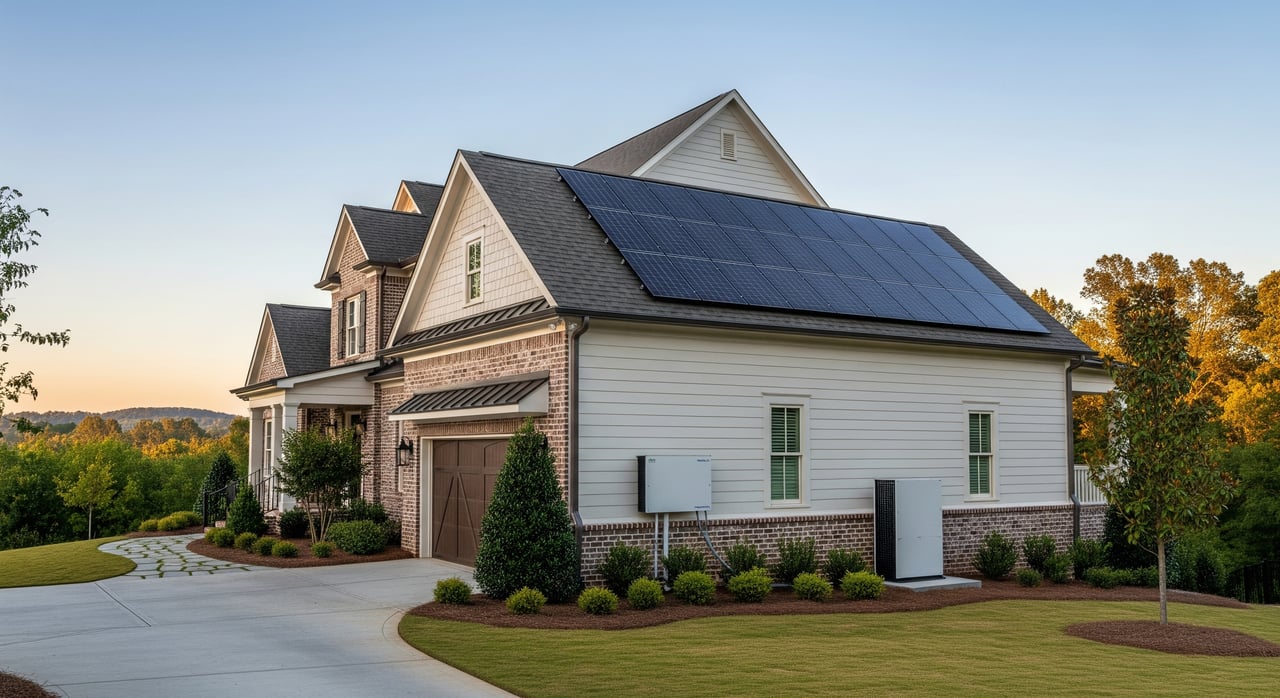
Suburban house with a large rooftop solar array, white siding, brick accents, and landscaped lawn.

Kennesaw Solar Battery Permit Process Simplified

November 6, 2025

Thinking about rooftop solar or a home battery but worried the permits will slow you down? You’re not alone. You want the savings and resiliency without surprises, redlines, or long waits. This guide walks you through exactly who approves what in Kennesaw, what to collect before you sign a contract, the step-by-step process, and the timelines you can expect. Let’s dive in.

Who handles permits in Kennesaw

If your home is inside City of Kennesaw limits, the City’s Development Services and Building & Inspections is the authority that issues building and electrical permits, reviews plans, and conducts inspections for solar and batteries. If your home is in unincorporated Cobb County, Community Development and Building Inspections at the County level handles the same duties.

Your electric utility approves the interconnection to the grid and gives Permission to Operate after final inspections and any meter work. Common standards enforced include the National Electrical Code, NFPA 855 for energy storage, and UL listings such as UL 1741 for inverters and UL 9540 for battery systems. The Fire Department or Fire Marshal may review battery siting, clearances, signage, and access. If you have an HOA, secure approval before any visible rooftop work.

Your step-by-step path

1) Pre-contract site check

Have a site visit to confirm roof age and condition, shading, electrical service capacity, panel and meter layout, and attachment points. Gather your utility account details for the interconnection application.

2) Get HOA approval

If applicable, submit project drawings and finish samples to the HOA and wait for written approval before proceeding.

3) Build a complete permit package

Your contractor prepares the permit set, which typically includes the application, a site plan, a single-line electrical diagram, equipment cut sheets, structural and attachment calculations, battery datasheets and instructions, inverter and disconnect details, clearance diagrams, and a labeling plan.

4) Submit to the right AHJ

  • Inside Kennesaw city limits: apply with City of Kennesaw Development Services for building and electrical permits.
  • Outside city limits in unincorporated areas: apply with Cobb County Community Development.

Many submittals are electronic. A licensed contractor or electrician usually pulls the electrical permit.

5) Plan review

The reviewer checks code compliance, equipment listings, structural info, fire safety requirements for batteries, and required labels. You may receive an approval, approval with conditions, or corrections.

6) Utility interconnection in parallel

Submit the residential interconnection application to your utility with the single-line diagram and inverter specs. The utility issues Permission to Operate after the authority having jurisdiction finalizes inspections and any meter changes are complete.

7) Inspections

  • Rough inspections: racking attachments, conduit, and wiring before concealment.
  • Electrical inspections: inverter, AC/DC disconnects, transfer switch if used, battery interconnects and controls, and any service modifications.
  • Fire checks: some installations require fire review or a field check for clearances, signage, and access around the battery.
  • Final: the inspector confirms labels, bonding, torque checks, and that the installation matches approved plans.

8) Post-inspection utility sign-off

After the final, submit proof of passed inspections to the utility. They complete meter work, if needed, and issue Permission to Operate.

9) Closeout

Keep copies of the finaled permit, equipment cut sheets, and the interconnection approval for your records.

What to gather before you sign

Collecting documents up front keeps your project moving. Share these with your contractor before you sign so the permit package is ready on day one.

  • Property and site

    • Proof of ownership or authorization if you are not the account holder
    • Site plan or plat showing the house, property lines, driveway, meter, and proposed array
    • Photos: full roof, attachment areas, attic if accessible, main service panel interior and exterior, meter, street view
  • Roof and structure

    • Roof age and material, plus any planned roof replacement timeline
    • Framing details such as rafter or truss spacing, roof pitch, and sheathing type
    • Structural calculations or an engineer letter if required, including any specialty details for tile or truss roofs
  • Electrical service

    • Main service rating and breaker sizes
    • Panel make and model
    • Meter base details and whether a new socket, CT, or bi-directional meter may be needed
  • Equipment documentation

    • Cut sheets for modules, inverters, combiners, disconnects, rapid shutdown equipment, and batteries
    • Battery datasheet and installation manual showing UL 9540 listing and required clearances
    • Inverter certification for UL 1741 and IEEE 1547 compliance
  • Plans and diagrams

    • Scaled site plan with roof access paths, array footprint, battery and disconnect locations
    • Single-line electrical diagram with conductor sizes, breaker and fuse sizes, grounding and bonding, and battery BMS and disconnects
    • Labeling plan for all required equipment and rapid shutdown identification
  • Administrative items

    • HOA approval letter when applicable
    • Contractor’s license status for the local permitting authority, proof of insurance, and electrician license as needed
    • Permit fee estimate and expected plan review timing

Timelines and how to avoid delays

Typical timelines vary by workload and jurisdiction, but these ranges are common for residential projects:

  • Plan preparation by contractor: 1 to 7 business days
  • Plan review by AHJ: 5 to 15 business days
  • Inspection scheduling: 2 to 7 business days from request
  • Utility interconnection review: 7 to 30 days depending on procedures and meter work

Common causes of delays and how to prevent them:

  • Missing or incomplete single-line diagram. Require a complete, legible single-line before submittal.
  • Equipment datasheets without listings. Include manufacturer cut sheets showing UL 1741 for inverters and UL 9540 for batteries.
  • Structural info gaps. Provide roof attachment calculations or an engineer letter if required.
  • Labeling not specified. Add a labeling plan and use standard templates.
  • Battery siting issues. Show clearances, egress, and signage to align with NFPA 855 guidance.
  • Licensing problems. Confirm your contractor can pull permits in Kennesaw or Cobb County.

Inspection success tips

  • Work with a contractor experienced with local reviewers and inspectors.
  • Submit a complete package rather than relying on multiple corrections.
  • Coordinate utility interconnection in parallel with permit submittal.
  • For backup power, include transfer switch details and NEC-compliant schematics.
  • Notify the local fire department early if your battery system is sizable or unique.

Verify your contractor

Before signing, confirm the contractor can pull City of Kennesaw or Cobb County permits, carries general liability and workers’ compensation, and has recent residential solar plus battery references in Cobb County or Kennesaw. Get a written scope that assigns who handles permitting, plan corrections, interconnection paperwork, meter upgrades, and inspection scheduling. Clarify equipment warranties, service expectations, and any manufacturer registration required for the battery.

Your role as the homeowner

Provide HOA approval early if needed, and share any planned roof work or large new electrical loads that could affect service capacity. Be available to sign utility forms and coordinate access for meter work and final inspections. Keep a clean record of your permit set, equipment cut sheets, and interconnection authorization for future reference.

Kennesaw items to double-check

Requirements and code editions can change, so confirm current plan review checklists, permit forms, and NEC edition with City of Kennesaw Development Services or Cobb County Building Inspections. Also verify your specific utility’s interconnection forms, net export rules, and meter change process.

Planning a move or upgrades

If you’re timing solar or a battery around buying or selling, plan the permit and interconnection timeline alongside your move. A smooth closeout with clear documentation helps you share accurate system details with future buyers and sets expectations for utility billing changes after PTO. If you want local perspective on neighborhood trends while you plan home improvements, our team is here to help.

Ready to align your home plans with your next move? Connect with the community-rooted team at Local Loyalty Realtors to talk strategy, timing, and our client-first rebate program.
FAQs

Do I need permits for rooftop solar in Kennesaw?

  • Yes. Inside city limits, the City of Kennesaw issues building and electrical permits. In unincorporated areas, Cobb County handles permits and inspections.

Who grants Permission to Operate for my system?

  • Your electric utility reviews the interconnection application and issues Permission to Operate after the authority having jurisdiction finalizes inspections and any meter work is complete.

What codes apply to home batteries in Kennesaw?

  • Installations follow the National Electrical Code and NFPA 855 for energy storage, and batteries typically must be listed to UL 9540 with inverters certified to UL 1741.

How long do approvals usually take for solar and batteries?

  • Plan prep can take 1 to 7 business days, jurisdictional review 5 to 15 business days, inspections 2 to 7 business days, and utility interconnection 7 to 30 days.

What if my address is outside Kennesaw city limits?

  • Properties in unincorporated Cobb County submit to Cobb County Community Development and Building Inspections rather than the City of Kennesaw.

Do I need HOA approval for a visible rooftop array?

  • Many HOAs require approval for visible exterior changes, so secure written HOA approval before you submit permits or start work.

Work With Us

We pride ourselves in providing personalized solutions that bring our clients closer to their dream properties and enhance their long-term wealth.