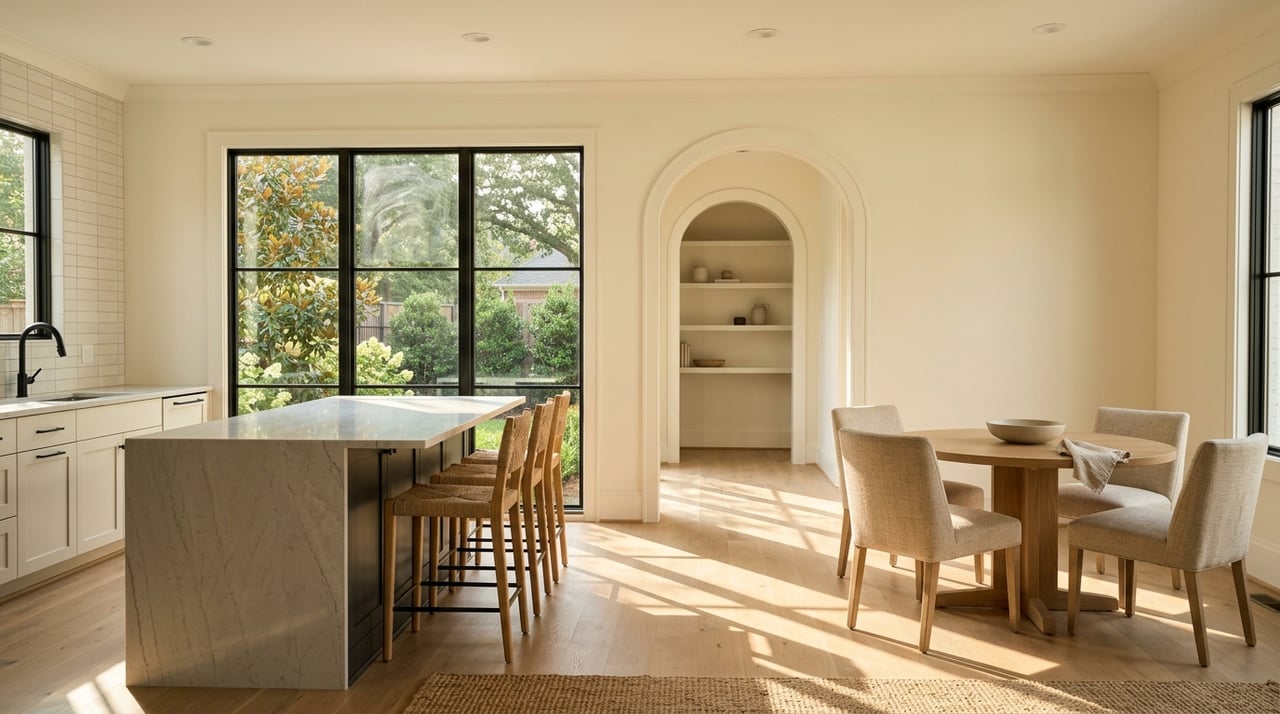
What Life Is Like in Milton Equestrian Golf Communities
July 2, 2026
July 2, 2026
Are you drawn to the idea of wide-open views, quiet roads, and a home that feels connected to the land, but you still want daily convenience? That is exactly why so many buyers look closely at Milton. If you are considering one of Milton’s equestrian or golf communities, it helps to understand what everyday life really feels like beyond the listing photos. Let’s dive in.
Milton describes itself as “rural but not remote,” and that phrase explains a lot about the city’s appeal. You can enjoy a quieter setting with access to shops, restaurants, and metro Atlanta amenities, while still living in a place that actively protects its open-space character.
That identity is not just branding. The city says it is dedicated to preserving rural heritage, and its policies, parks, and community programming all support that goal. For you as a buyer, that often translates into a lifestyle that feels more spacious, scenic, and grounded than a typical compact suburban setting.
Milton has a strong and visible horse culture. The city maintains a formal Milton Equestrian Committee, and a 2024 city-led farm census found more than 200 active horse farms throughout Milton.
One important detail is that these farms are dispersed across the city, not tucked into one small pocket. That means you do not have to live in a single designated horse district to feel the equestrian influence. In many parts of Milton, pastures, fencing, barns, and scenic road frontage are simply part of the everyday backdrop.
If you are moving into Milton’s horse-country areas, daily life often looks a little different from standard subdivision living. Properties commonly reflect larger setbacks, longer driveways, more visible landscape features, and land-use elements such as fencing, barns, or run-in sheds.
That does not mean every home is an active horse property. In many cases, people simply enjoy living among horse farms and open pastures. If you love a calmer visual environment and more breathing room around you, that setting can be a major part of the appeal.
Milton’s layout is closely tied to its development rules. The city’s 2024 Unified Development Code shows that AG-1 lots on paved roads require a 1-acre minimum area and 150-foot minimum width at the building line, while lots on unpaved roads require 3 acres and 200 feet of width.
The city also defines a “large lot” as 3 acres or bigger and directly addresses features like barns, driveway access, run-in sheds, agricultural exemptions, and covered riding arenas on 10-plus-acre properties. For you, this matters because the lifestyle is supported by the city’s land-use framework, not left to chance.
Milton says much of its rural look and feel was preserved historically because many properties relied on septic systems, which often meant parcels of at least one acre. That helps explain why many equestrian-oriented neighborhoods feel like an extension of the landscape instead of a typical dense subdivision.
If you are searching for privacy, open views, and room to spread out, this pattern is one of Milton’s clearest strengths. It also means your home search may involve different priorities than in a more compact suburban market.
Milton’s rural identity is reinforced by public spaces, not just private homes. The city’s Trails Advisory Committee says its mission is to preserve Milton’s rural nature through an all-encompassing trail network.
For many residents, that makes the lifestyle feel active and connected. You are not only looking at open land from your car window. You also have public spaces that reflect the same values of nature, access, and scenery.
Birmingham Park is a 200-acre natural park and part of Milton’s growing trail network. The city has repeatedly upgraded the park for trail riders, which shows how closely public recreation aligns with Milton’s equestrian identity.
If you enjoy outdoor time, this kind of resource adds depth to daily living. Even if you do not own horses, living near a trail-oriented, natural park can be a meaningful part of the Milton experience.
Milton City Park and Preserve blends active and passive recreation. It includes a 7-acre active area, a 130-acre passive preserve, and a 2.5-mile trail loop.
The active side also includes a pool, tennis, and rentable community space. That mix is especially appealing if you want a home base that feels rural but still offers convenient places for recreation, gatherings, and routine family activities.
In Milton, horse culture is not hidden behind gates. It shows up in civic life and public events.
The city-run Meet the Neighbors event includes pony rides, tack, and farm-animal encounters. Milton has also adopted a rule that bars fireworks within 200 yards of the border of any property with horses.
These details matter because they show that equestrian life is treated as a shared part of the community identity. If you are moving from outside the area, that can help you understand why Milton feels distinct from other North Atlanta suburbs.
A rural setting only works for many buyers if it is also practical. Milton’s own description of being “rural but not remote” speaks directly to that concern.
You can enjoy a quieter, lower-density environment without feeling cut off from day-to-day needs. The city also supports neighborhood-scale routines through community activities like Toddler Tuesdays, mah jongg, and a monthly book club, which adds another layer to the lifestyle.
If horses are one side of Milton’s identity, golf is another. Milton offers several private-club reference points that help shape its golf-community appeal.
For many buyers, golf living is about more than the course itself. It often includes club amenities, dining, events, recreation, and a built-in social rhythm that becomes part of everyday life.
The Manor Golf & Country Club is one of Milton’s best-known golf lifestyle anchors. Its official site describes a gated private club with championship golf, tennis and pickleball courts, a resort-style pool, a fitness center, dining, year-round social events, and family activities.
If you want a residential setting tied to a full-service private club experience, this is the kind of environment that often draws attention. The appeal is not just recreation, but also convenience and an organized social calendar.
Atlanta National Golf Club adds another private-club option in Milton. The club features an 18-hole Pete and P.B. Dye course, an island green, strategic hazards, a two-sided range, short-game practice areas, and lessons for adults and juniors.
That variety can matter if you want regular access to instruction, practice space, or event hosting support. For some buyers, those details are a meaningful part of how they picture daily life in a golf-centered community.
Capital City Club’s Crabapple property gives Milton another private-club reference point. The club lists its Milton address on New Providence Road and notes that event planning opportunities are expected to resume in 2026 after a golf-course renovation project.
That helps reinforce a broader point about Milton’s golf market. In many cases, buyers are not only considering a course nearby. They are also considering clubhouse culture, events, and the rhythms that come with private membership environments.
When buyers explore Milton’s equestrian and golf communities, they are usually choosing among a few core lifestyle priorities. The most common include:
Milton’s own language emphasizes large lots, rural heritage, scenic character, and quality of life. If those priorities matter more to you than compact-lot convenience, Milton may feel like a strong fit.
Every lifestyle comes with tradeoffs, and Milton is no exception. In equestrian-oriented or large-lot areas, upkeep can be more involved than in a smaller suburban neighborhood.
Depending on the property, you may be thinking about longer driveways, more landscaping, fencing, outbuildings, or land-use considerations. On the golf side, some of the most desirable settings are tied to private clubs, which means access may depend on membership.
As you compare homes and neighborhoods, it helps to ask practical questions such as:
These questions can help you narrow in on the kind of Milton lifestyle that fits you best.
In Milton, the surroundings matter almost as much as the house itself. A beautiful home may feel very different depending on lot size, road type, landscape, nearby open space, and access to clubs or parks.
That is why it helps to look beyond finishes and square footage. If you are relocating or moving within North Atlanta, a neighborhood-focused approach can help you compare not just homes, but the everyday routines each setting supports.
Milton’s equestrian and golf communities stand out because they are part of a bigger lifestyle ecosystem. The city’s zoning, parks, trails, community events, and club environments all reinforce a lower-density, amenity-rich way of living.
If you are looking for a home where privacy, land, recreation, and scenic character all play a role in daily life, Milton offers a compelling mix. And if you want help comparing neighborhoods, lot types, and lifestyle tradeoffs, Local Loyalty Realtors can guide you with local insight, clear communication, and full-service support.
We pride ourselves in providing personalized solutions that bring our clients closer to their dream properties and enhance their long-term wealth.